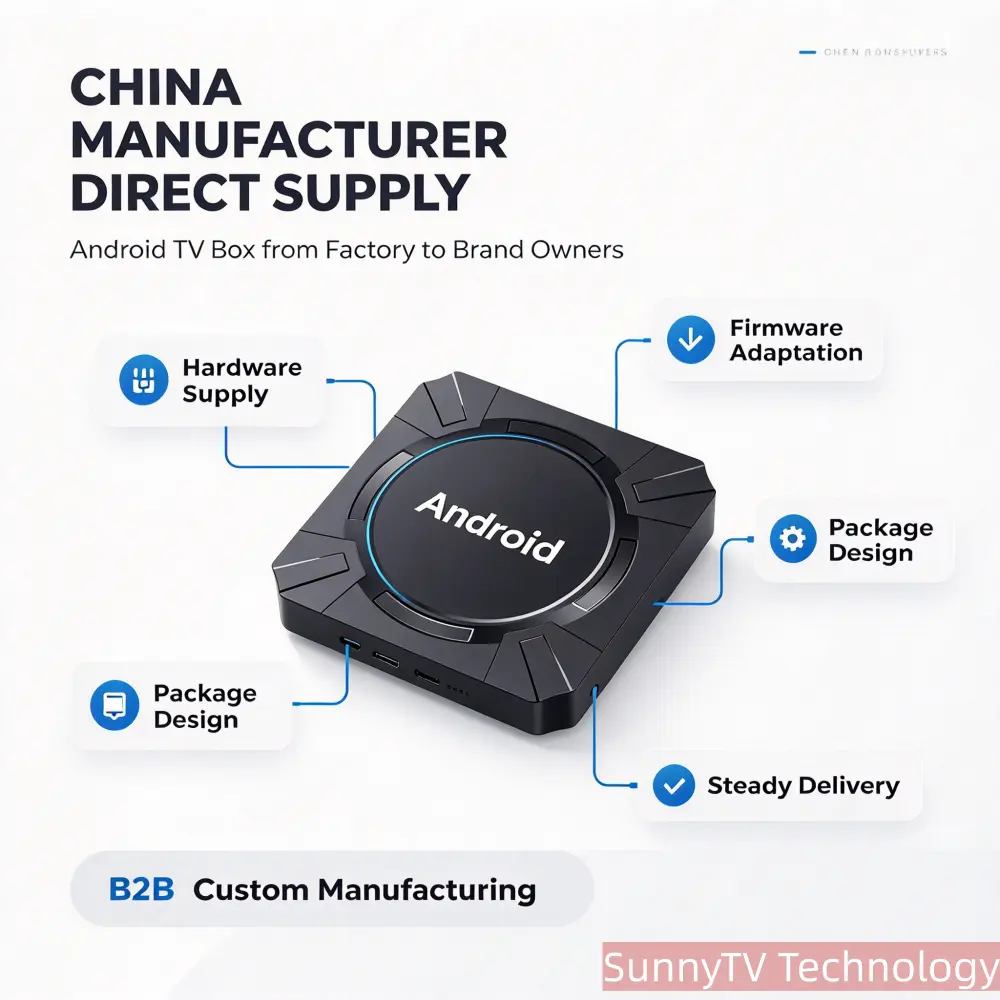
How to Scale an Android TV Box Brand with a Reliable China OEM/ODM Partner
Building an Android TV Box brand is relatively straightforward in its early stages. A single successful model, sourced from a competent supplier, can generate enough traction to validate a market hypothesis. Scaling that brand, however, is a fundamentally different challenge. It requires production consistency across larger volumes, a product roadmap that responds to changing market demands, dependable quality control, and a supply chain that does not collapse when orders triple or quadruple.
For most brand owners, distributors, and cross-border sellers, the practical answer to this challenge lies in establishing a durable relationship with a China OEM/ODM partner rather than simply transacting with a series of trading companies. The distinction matters. A trading company moves boxes. A genuine manufacturing partner supports your growth with engineering capability, customization flexibility, and process discipline that compounds over time.
This guide examines the operational realities of scaling an Android TV Box brand, from early supplier evaluation through advanced customization and long-term partnership management. It draws on the perspective of manufacturers who serve B2B clients in this category and who understand where scaling efforts typically succeed and where they fail.
Why Scale Through a Manufacturing Partner Rather Than a Trader
In the early stages of a brand, price and speed dominate decision-making. A trading company can often quote lower prices on identical specifications because it aggregates orders across multiple factories and carries minimal overhead. This model works acceptably at low volumes with standard products.
As volume increases, the limitations of the trading model become visible. Communication chains lengthen, customization requests are relayed imperfectly, quality issues are difficult to trace, and lead times become unpredictable because the trader does not control production scheduling. When a brand begins to differentiate its products through firmware, packaging, or hardware modifications, the trading model breaks down entirely.
A manufacturing partner offers capabilities that directly support scaling. These include direct engineering access, control over production scheduling, the ability to hold and manage inventory components, and accountability for quality outcomes. The following table summarizes the practical differences across the growth cycle.
| Growth Stage | Trading Company Model | Manufacturing Partner Model |
|---|---|---|
| Low volume, standard product | Adequate; competitive pricing | Viable, but value less apparent |
| Mid volume, customization required | Increasingly difficult; relay delays | Direct engineering support |
| High volume, brand differentiation | Not sustainable | Full ODM capability, roadmap alignment |
| Quality issue resolution | Indirect, slow, unclear accountability | Direct, traceable, corrective action |
This is not an argument against all intermediaries. Some trading companies add genuine value through logistics coordination, market knowledge, or financial intermediation. The point is that scaling a brand requires capabilities that only direct manufacturing relationships can provide.
Defining What You Are Actually Scaling
Before evaluating suppliers, brand owners should clarify what they intend to scale. An Android TV Box brand can scale along several different dimensions, and each has different supply chain implications.
Volume Scaling
The simplest form of growth is selling more units of the same product. This requires production capacity, component supply stability, and consistent quality at higher throughput. Volume scaling exposes weaknesses in supplier capacity planning and incoming material management. A supplier that performs well at 500 units per month may struggle at 5,000 units per month if its component procurement is not structured for larger orders.
Product Line Scaling
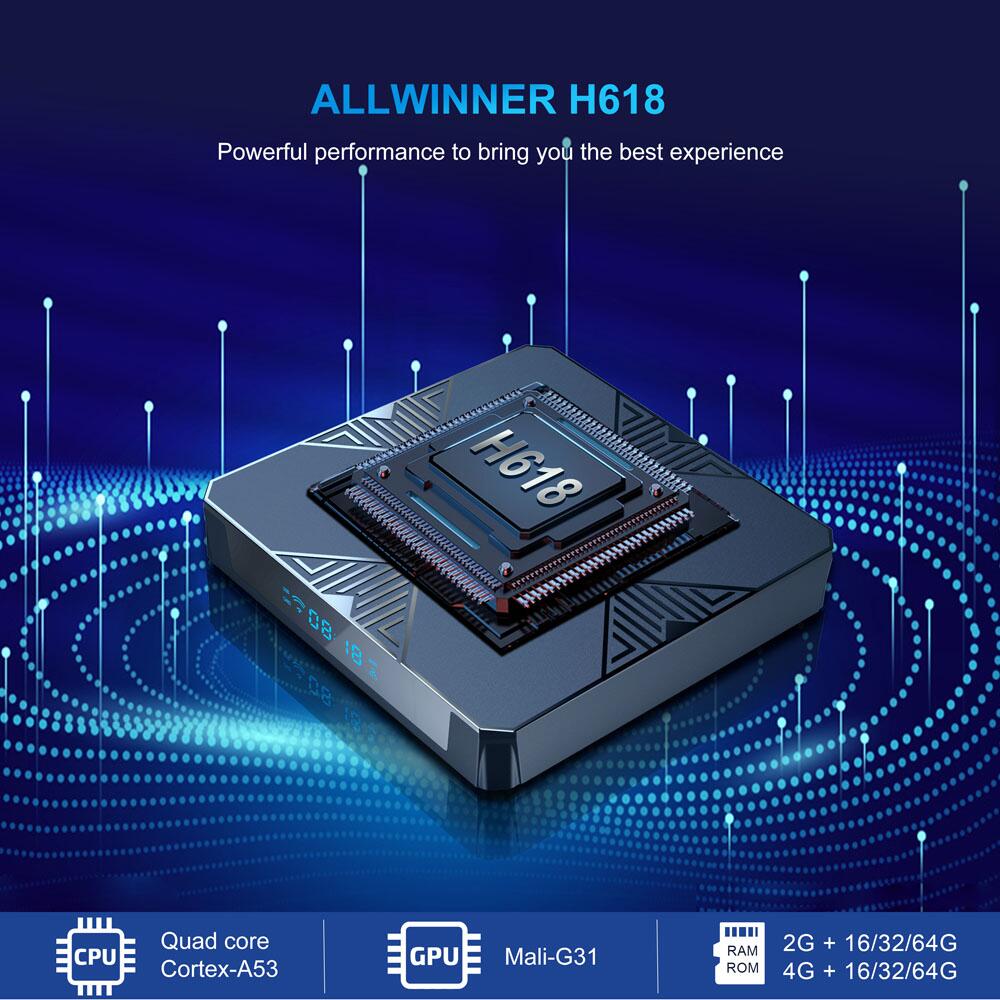
Adding models at different price points or with different feature sets requires a supplier capable of supporting multiple hardware configurations. This typically involves different SoC options, varying RAM and storage combinations, and different connectivity configurations. A partner with a broad platform portfolio and existing reference designs can accelerate time to market significantly.
Geographic Scaling
Entering new markets introduces regulatory, certification, and localization requirements. Different regions require different power adapters, different certification marks, different language support, and different content partnerships. A supplier experienced in export markets will have established processes for these requirements rather than treating each as a new project.
Brand Scaling
As brand recognition grows, expectations increase. Packaging quality, firmware polish, documentation, and after-sales support all become more visible. Scaling a brand means scaling quality perception, which depends heavily on manufacturing consistency and attention to detail.
Clarifying which dimensions are priorities helps focus supplier evaluation on the capabilities that matter most.
Core Capabilities to Evaluate in an OEM/ODM Partner
The following capabilities distinguish manufacturers capable of supporting long-term brand growth from those suited only to transactional orders.
Hardware Engineering and Reference Design Depth
An OEM Android TV Box manufacturer should maintain reference designs across multiple SoC platforms. This allows buyers to select a platform based on performance, cost, and availability without waiting for a new design cycle. Reference designs also reduce development risk and shorten time to market for derivative products.
Beyond reference designs, the manufacturer should employ hardware engineers capable of schematic modification, PCB layout adjustment, and thermal design. These capabilities matter when a buyer needs a customized interface configuration, a different form factor, or improved thermal performance for a specific deployment environment.
Firmware and Software Development
Software capability separates basic assemblers from genuine ODM partners. Core software services include Android BSP customization, kernel optimization, driver integration, and application development. For Android TV Box products, relevant capabilities include:
- Custom launcher and user interface development
- DRM integration for streaming content platforms
- OTA update infrastructure for deployed devices
- Google certification support where applicable
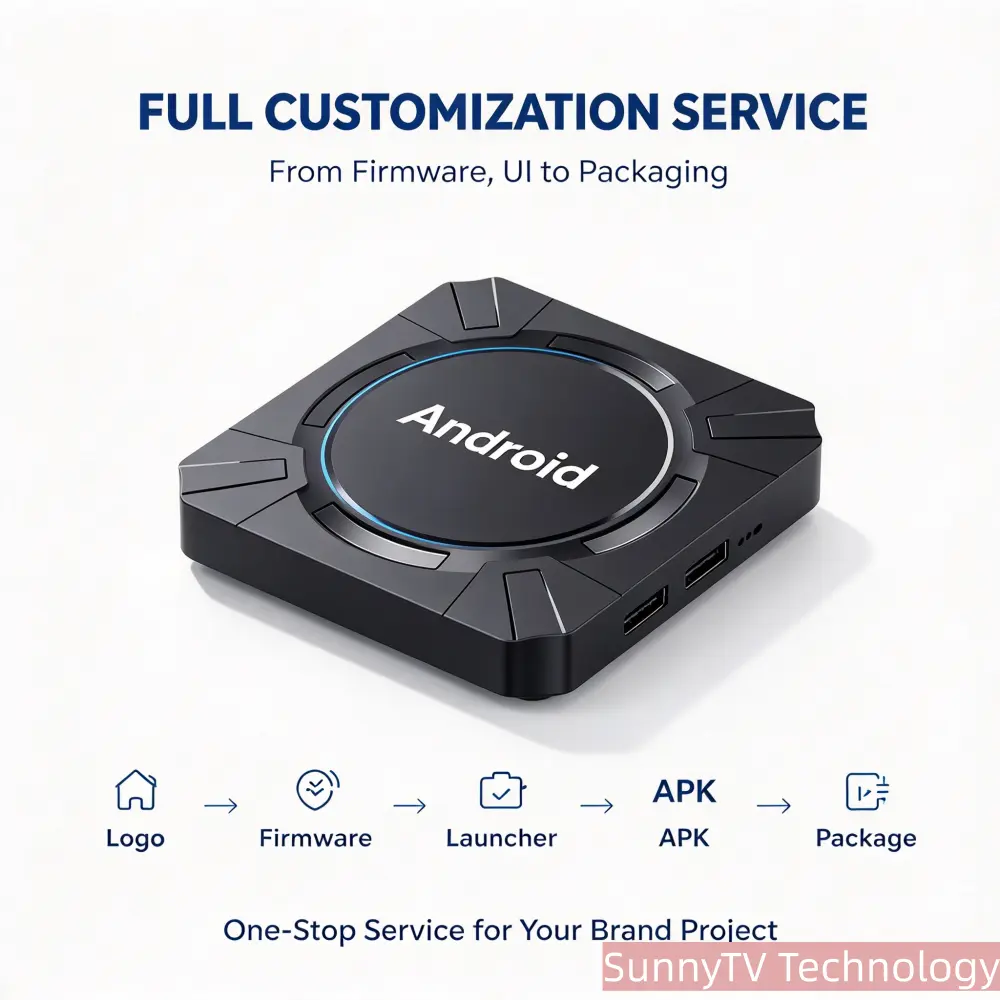
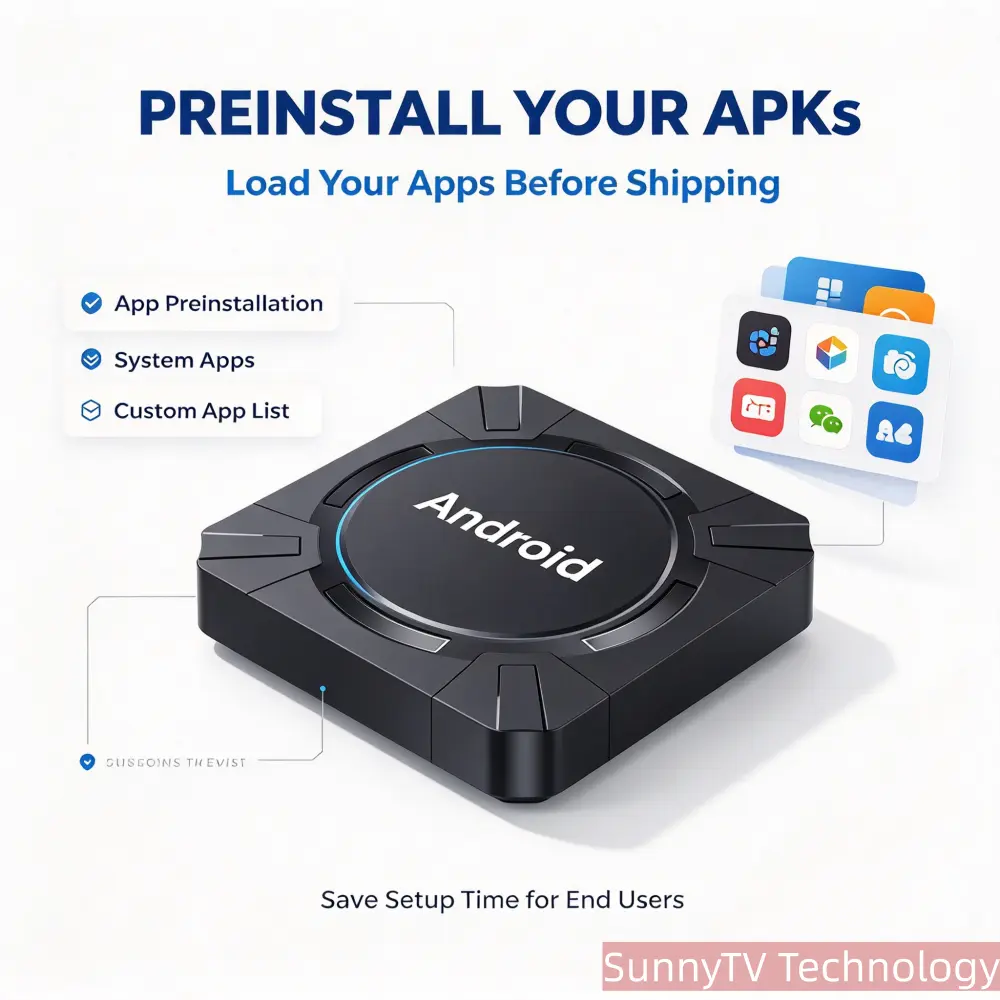
- Custom boot animation, logo, and preinstalled application configuration
- Root access and system-level modification for specialized deployments
Buyers should verify software capability through specific questions about past projects, development team size, and version control practices. Vague answers indicate limited in-house capability.
Quality Management Systems
Quality systems determine whether scaling increases revenue or increases returns. Relevant elements include incoming material inspection, in-process quality control, functional testing at multiple production stages, aging and burn-in testing, and final quality assurance before packing.
Manufacturers operating under ISO 9001 or equivalent systems maintain documented processes and traceability. Buyers should request documentation of testing protocols and sample inspection records rather than relying on verbal assurances.
Production Capacity and Scheduling Discipline
Capacity claims should be verified with specifics. Relevant questions include the number and type of SMT lines, daily assembly output, testing station capacity, and typical lead times for repeat orders. Manufacturers with excess capacity relative to their current order book can accommodate growth more reliably than those operating near full utilization.
Component Sourcing Relationships
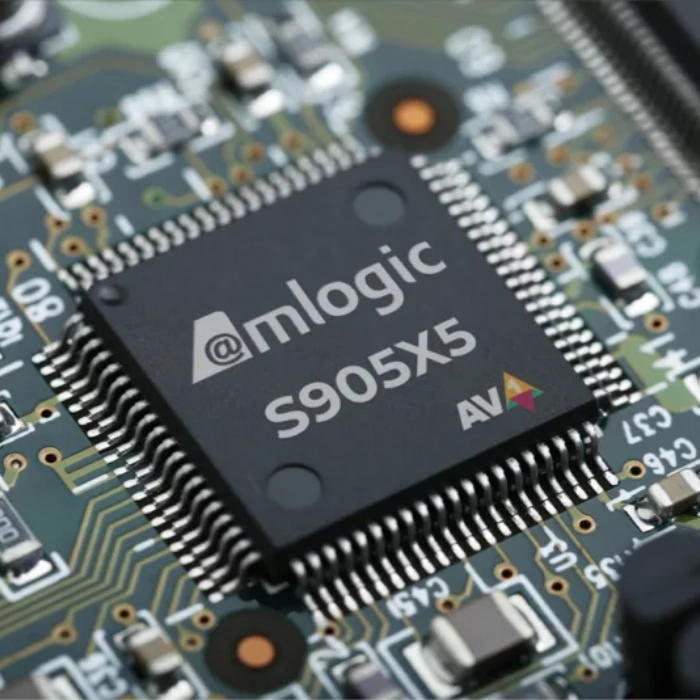
Android TV Box production depends on continuous availability of SoCs, memory, storage, wireless modules, and passive components. Manufacturers with established relationships with Rockchip, Amlogic, and other platform vendors, as well as authorized distributor channels for memory and wireless modules, can navigate supply fluctuations more effectively than those purchasing on spot markets.
Structuring the Partnership for Growth
The commercial structure of the relationship influences how well it supports scaling. Several structural elements deserve attention.
Pricing Tiers and Volume Commitments
Volume-based pricing tiers should be established in advance with clear thresholds. Buyers benefit from understanding the cost implications of different order sizes, and manufacturers benefit from predictable demand planning. Agreements should specify how pricing adjusts as volumes grow and how component cost changes are handled.
Tooling and NRE Arrangements
Custom enclosures, custom packaging, and custom PCB designs involve non-recurring engineering costs and tooling investment. Buyers should clarify ownership of tooling and molds, amortization arrangements, and what happens to tooling if the relationship ends. Clear terms prevent disputes later.
Intellectual Property Protection
Brand owners investing in custom firmware, industrial design, or proprietary applications should establish clear IP protection terms. This includes non-disclosure agreements, restrictions on manufacturing competing products using buyer-developed designs, and clarity on ownership of jointly developed technology.
Exclusivity Terms
In some cases, buyers negotiate exclusivity for specific designs or markets. Exclusivity arrangements should be balanced against realistic volume commitments. Manufacturers cannot reasonably reserve designs or markets without corresponding commercial justification.
Certification and Compliance Considerations
Android TV Box products require compliance with a range of standards depending on destination markets. Common requirements include:
- CE marking for the European Union
- FCC certification for the United States
- RoHS and REACH compliance for material restrictions
- UKCA marking for the United Kingdom
- RCM marking for Australia and New Zealand
- PSE marking for Japan
- Bluetooth SIG and Wi-Fi Alliance certifications for wireless functionality
Certification is a common source of delay for growing brands. A supplier with established certification processes and pre-existing test reports for common platforms can shorten time to market considerably. Buyers should confirm whether certification costs are included in quotations and how future product revisions affect existing certificates.
Google certification, where applicable, deserves particular attention. Android TV and Google TV products intended for retail distribution generally require Google approval, which involves specific hardware and software requirements. Manufacturers experienced with the Google certification process add substantial value to buyers targeting mainstream retail channels.
Quality Control Across Scale
Quality outcomes often deteriorate as volume increases if systems are not designed for scale. The following practices help maintain consistency.
Incoming Material Inspection
Component quality directly determines finished product reliability. Manufacturers should perform incoming inspection on critical components, including SoCs, memory, storage, wireless modules, and power adapters. Counterfeit or downgraded components are a persistent risk in electronics supply chains and can cause field failures that damage brand reputation.
In-Process Testing
Testing at multiple stages catches defects early, when correction is less costly. Typical stages include functional testing after SMT, testing after assembly, and final functional verification before packing. Test coverage should include wireless functionality, all ports, video output, and thermal behaviour under load.
Aging and Burn-In
Aging and burn-in testing identifies early failures that would otherwise appear in the field. Common practice involves running devices under load for a defined period, monitoring temperature and functional stability. Buyers should ask about aging duration and pass rate thresholds.
Statistical Process Control
Manufacturers operating at scale should track defect rates and apply corrective action processes. Buyers should request periodic quality reports and expect transparency on any issues encountered and resolved.
Logistics and Inventory Management
As volume grows, logistics becomes a significant operational function rather than an afterthought. Key considerations include shipping method selection, consolidation opportunities, and inventory positioning.
Air freight is appropriate for urgent replenishment and new product launches, while sea freight supports routine volume shipments at lower cost. Buyers should understand the trade-offs between shipping cost, transit time, and inventory carrying cost. Working with a supplier experienced in export logistics reduces the risk of documentation errors and port delays.
Some buyers establish regional warehouses to reduce delivery times to end customers. This approach requires accurate demand forecasting and coordination with the manufacturer on production scheduling and packaging specifications suited to warehouse handling.
Building a Product Roadmap Together
Long-term partnerships involve collaborative planning rather than sequential ordering. A manufacturing partner can contribute to roadmap development by sharing platform availability information, industry trends, and engineering feasibility assessments. This input helps buyers avoid committing to platforms that will be discontinued or to designs that will prove difficult to manufacture.
Regular business reviews, typically quarterly, provide a structured opportunity to align on forecasts, review quality metrics, discuss upcoming product plans, and address any operational issues. Buyers who treat suppliers as strategic partners rather than vendors generally achieve better outcomes during periods of supply constraint or rapid growth.
Common Mistakes When Scaling an Android TV Box Brand
Certain patterns appear repeatedly among brands that struggle to scale successfully.
- Selecting suppliers on price alone, then discovering that quality and communication are inadequate
- Failing to verify production capacity, then experiencing chronic lead time delays
- Requesting customization without confirming in-house engineering capability
- Neglecting to clarify IP ownership and tooling arrangements in advance
- Underestimating certification timelines and costs
- Maintaining multiple suppliers for the same product, creating inconsistency
- Treating the supplier relationship transactionally rather than collaboratively
Avoiding these mistakes requires disciplined supplier evaluation and clear communication of expectations from the outset.
Conclusion
Scaling an Android TV Box brand from a small operation into a sustainable business depends heavily on the manufacturing partnership behind it. Volume growth exposes weaknesses in capacity planning, quality systems, and communication. Product differentiation requires engineering capability that trading intermediaries cannot provide. Market expansion demands certification and documentation expertise that only experienced manufacturers possess.
For brand owners, distributors, and cross-border sellers, the practical path forward involves identifying a China OEM/ODM partner with demonstrated hardware and software capability, documented quality systems, and a genuine willingness to invest in long-term collaboration. The initial effort required to evaluate and establish such a relationship pays dividends as order volumes grow and product requirements become more complex.
As a manufacturer serving B2B clients in this category, we support brand owners through reference design platforms, custom firmware development, OEM Android TV Box production, and full ODM project execution. For inquiries regarding specifications, samples, production capacity, or partnership terms, please visit https://customtvbox.com to discuss your requirements with our team.

Leave a comment
All fields marked with an asterisk(*) are required