How to Choose the Right Android TV Box Manufacturer in China (2026 Buyer's Guide)
The global demand for high-performance home entertainment, OTT streaming, and commercial digital signage has accelerated rapidly. At the heart of this expansion is the hardware that powers these experiences. Sourcing hardware directly from overseas production hubs remains the most cost-effective path for brand owners, telecom operators, and system integrators. However, identifying a dependable Android TV Box manufacturer in China requires navigating a complex landscape of technical specifications, certification requirements, factory auditing, and long-term quality assurance.
A simple internet search will reveal thousands of suppliers claiming to offer industry-leading set-top box solutions. Yet, the gap between a low-cost reseller and a true original design manufacturer (ODM) with full engineering capabilities is immense. Choosing the wrong partner can lead to delayed production schedules, severe overheating problems, high return rates due to subpar components, or legal compliance blockages over uncertified software stacks. This guide provides a detailed, battle-tested framework for evaluating and selecting an enterprise-grade Android TV Box manufacturer that aligns with your specific technical, volume, and commercial goals.
Understanding the Manufacturing Landscape in China
China remains the undisputed global capital for set-top box production, with the vast majority of engineering and assembly concentrated in Guangdong province, particularly Shenzhen and Dongguan. Within this manufacturing ecosystem, suppliers generally fall into three distinct operational tiers:
- Tier 1: Enterprise ODMs & Tier-1 Operator Suppliers. These facilities operate large-scale surface-mount technology (SMT) lines, hold direct tier-1 partnerships with Google, Netflix, and Dolby, and cater predominantly to national telecom operators, major consumer electronics brands, and tier-1 retail labels. They require high minimum order quantities (MOQs), often starting at 10,000 to 50,000 units, but offer unmatched engineering precision and full licensing compliance.
- Tier 2: Specialized OEM/ODM Factories. Mid-sized manufacturing operations specializing in medium-to-large production runs (1,000 to 10,000 units). They possess in-house hardware engineering, software development teams, and dedicated assembly lines. They provide an optimal balance of flexibility, custom firmware adaptation, competitive pricing, and robust quality control.
- Tier 3: Trading Companies & Small Assemblers. Entities that purchase ready-made mainboards (PCBA) from third parties, snap them into off-the-shelf plastic enclosures, and re-export them. While they offer very low MOQs and lower upfront costs, they lack control over firmware updates, hardware component traceability, or long-term component lifecycle management.
To build a scalable and sustainable hardware business, serious brand owners must partner directly with a Tier 1 or Tier 2 Android TV Box manufacturer capable of providing complete transparency from component sourcing to final burn-in testing.
Key Criteria for Evaluating an Android TV Box Manufacturer
When shortlisting prospective manufacturing partners, evaluation must extend beyond initial unit pricing. The overall total cost of ownership is determined by build quality, software stability, regulatory compliance, and post-sales technical support.
1. Core Engineering Capabilities: Hardware and Firmware Integration
A true manufacturing partner does not merely snap circuit boards into plastic shells; they design and optimize the system architecture. Assess whether the factory maintains dedicated hardware (HW) and software (SW) R&D engineering teams on site.
Key technical capabilities to verify include:
- System-on-Chip (SoC) Mastery: Proven track record with primary silicon providers such as Amlogic, Rockchip, and Allwinner. The engineering team should demonstrate deep expertise in optimizing kernel performance, power management, and thermal dissipation for specific chips (e.g., Amlogic S905X4, S905Y4, or Rockchip RK3588).
- Custom Launcher & Firmware Development: Ability to build custom Android Open Source Project (AOSP) or Android TV (ATV) builds, incorporate pre-installed applications, hardcode system settings, implement custom boot logos, and configure private OTA (Over-The-Air) update servers.
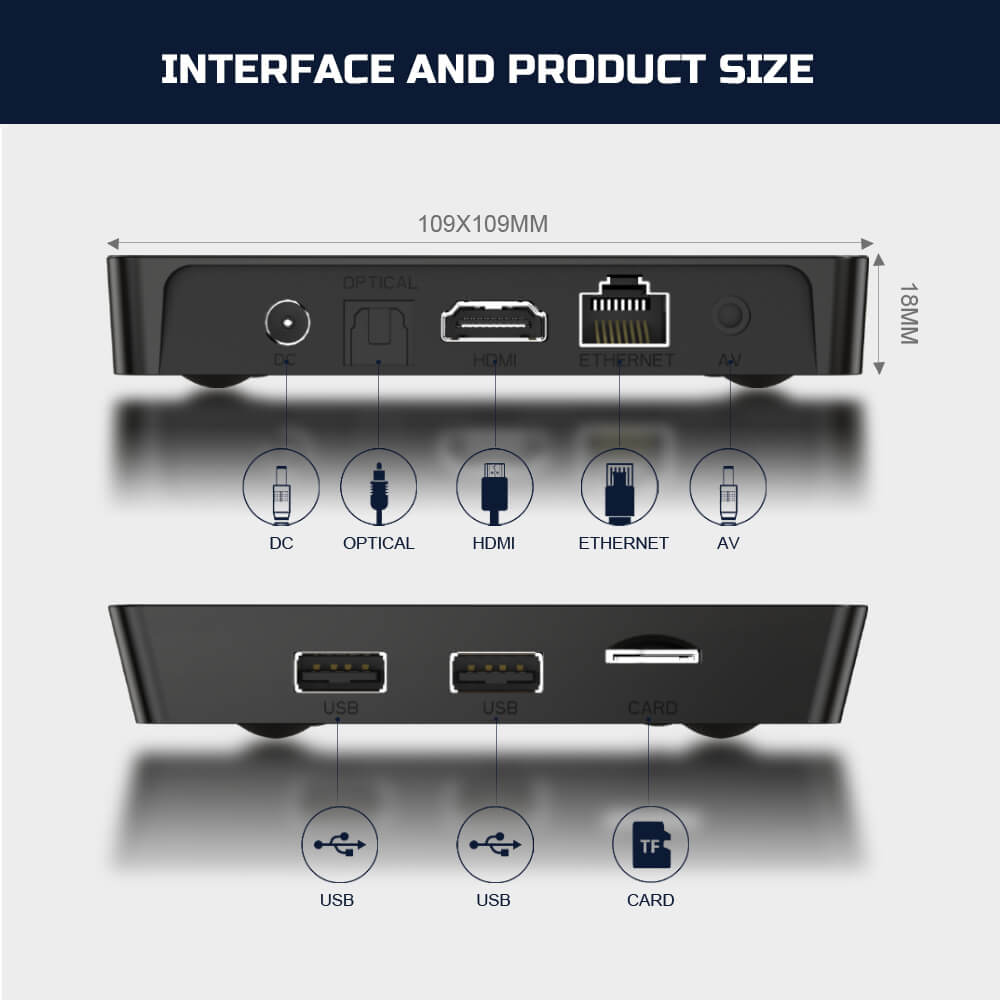
- Peripheral & Interface Design: Hardware expertise in integrating Wi-Fi 6 modules, Bluetooth 5.x antennas, Gigabit Ethernet controllers, HDMI 2.1 outputs, and specialized commercial I/O such as RS-232, optical S/PDIF, or TV tuner interfaces (DVB-T2/C/S2, ISDB-T).
2. Software Certifications and Content Security Licensing
Software compliance is one of the most critical dividing lines in set-top box production today. Uncertified devices face immediate blocks from premium streaming platforms and potential customs seizures due to intellectual property violations.
| Certification / License | What It Covers | Why It Matters for B2B Buyers |
|---|---|---|
| Google Mobile Services (GMS) / Android TV Certified | Official Android TV OS licensing, Google Play Store access, integrated Chromecast support, and Google Assistant integration. | Prevents software bricking, guarantees long-term Play Store compatibility, and provides official UI experiences. |
| Netflix / Prime Video Certification | Hardware-level cryptographic security allowing HD and 4K playback on premium OTT services. | Uncertified boxes are restricted to 480p standard definition streaming or blocked completely by content providers. |
| Digital Rights Management (DRM) | Widevine L1 (Google), PlayReady (Microsoft), and Verimatrix integration. | Essential for telecom and IPTV operators delivering protected pay-TV streams to subscriber bases. |
| Audio & Video Codec Licensing | Dolby Audio, Dolby Atmos, DTS, and HDMI adopter licensing. | Protects importers against patent infringement lawsuits and customs confiscations at international ports. |
An experienced Android TV Box manufacturer will clearly explain the distinction between raw AOSP builds (which do not automatically include Widevine L1 or official Netflix clearance) and certified Android TV platforms, guiding you toward the correct licensing path based on your target market.
3. SMT Infrastructure and Hardware Quality Control
Hardware failure rates in consumer electronics are heavily dictated by the precision of the SMT process and the quality of passive components used on the mainboard. When auditing an Android TV Box manufacturer, inspect their production lines directly or request full factory audit documentation.
High-standard factories employ rigid quality assurance protocols across every stage of assembly:
- Incoming Quality Control (IQC): Testing of incoming silicon, DDR memory modules (e.g., Samsung, Kingston, or SK Hynix), eMMC storage chips, and multi-layer PCBs before they reach the assembly floor. Avoid manufacturers utilizing refurbished or unbranded flash memory.
- Automated Optical Inspection (AOI) & X-Ray Inspection: AOI machines verify component placement and solder joint accuracy, while X-Ray testing ensures BGAs (Ball Grid Arrays) underneath primary SoCs are free from solder bridges or voiding.
- Thermal Management & Heat Sink Quality: Poor thermal dissipation leads to CPU throttling, system lag, and premature device failure. Verify that the factory utilizes adequate aluminum heat sinks and high-grade thermal conductive pads rather than undersized, low-cost metal scrap.
- Burn-In and Aging Testing: Professional facilities place 100% of manufactured mainboards through continuous high-temperature aging chambers running at full processing load for 4 to 24 hours prior to final casing assembly.
Step-by-Step Guide to the Sourcing Process
Partnering with an overseas hardware vendor requires a structured methodology to mitigate financial, technical, and operational risks. Follow these logical steps during your procurement cycle:
Step 1: Define Technical Specifications & Commercial Scope
Before contacting suppliers, create a detailed Request for Quotation (RFQ) outlining every element of your required hardware specification. Specify the SoC processor platform, memory configuration (e.g., 2GB DDR4 + 16GB eMMC), target operating system version, Wi-Fi specifications (Dual-band Wi-Fi 5 vs. Wi-Fi 6), required I/O ports, Bluetooth requirements, and target retail or operator packaging specifications.
Step 2: Initial Screening and Supplier Shortlisting
Gather proposals from multiple candidates and filter them against key operational metrics. Ensure the vendor holds ISO 9001 quality management certification and can provide existing international product certificates, including CE, FCC, RoHS, and WEEE. Confirm whether they have direct experience shipping to your target region, as local market standards vary significantly between North America, Europe, Southeast Asia, and Latin America.
Step 3: Sample Ordering and Comprehensive Testing
Never place a volume order without thoroughly stress-testing physical samples. Order at least 3 to 5 golden samples from the candidate Android TV Box manufacturer and subject them to rigorous testing routines:
- Thermal Stress Test: Run high-bitrate 4K AV1/HEVC video loops for 48 consecutive hours while monitoring board temperatures using infrared sensors.
- Wireless Throughput Test: Evaluate Wi-Fi signal stability, packet loss, and throughput performance across varying distances and through structural obstacles.
- Firmware Customization Verification: Confirm that custom boot animations, launcher setups, pre-loaded APKs, and remote control button mappings perform accurately without system crashes.
- Power Supply Unit (PSU) Reliability: Test the bundled power adapters for voltage stability, ripple noise, and compliance with local safety standards (UL, GS, PSE, or CE). Subpar power adapters are the single leading cause of field returns in consumer set-top box deployments.
Step 4: Factory Audits and Production Inspection
For orders exceeding 1,000 units, conducting a physical factory audit is strongly recommended. If travel is not feasible, engage a reputable third-party inspection agency (such as SGS, Bureau Veritas, or TÃV Rheinland) to conduct an on-site evaluation. The audit should assess raw material storage conditions, electrostatic discharge (ESD) protection measures across the factory floor, worker safety standards, and traceability systems for defective boards.
Step 5: Contract Negotiation, Milestones, and Quality Control Terms
Ensure your manufacturing agreement explicitly dictates technical specifications, quality control acceptance thresholds (AQL standards), production milestones, and warranty terms. Standard terms generally follow an Acceptable Quality Limit of AQL 1.0 for Critical Defect, 1.5 for Major Defect, and 4.0 for Minor Defect.
Structure your payment terms tied to clear production milestones (e.g., 30% deposit upon order confirmation, and 70% balance payment following successful pre-shipment inspection pass by your auditor).
Red Flags to Avoid When Sourcing Set-Top Boxes
Navigating international manufacturing requires vigilance. Watch out for these operational red flags when dealing with a potential Android TV Box manufacturer:
- Unrealistically Low Unit Prices: Hardware pricing across main SoC lines is globally transparent. If a vendor offers pricing significantly below the market average, they are likely using recycled eMMC flash chips, fake DDR RAM modules, uncertified power supplies, or omitting proper thermal cooling plates.
- Reluctance to Provide PCB Photos: A genuine engineering factory will gladly share high-resolution images of their bare motherboard layouts, component bill of materials (BOM), and SMT lines. Reluctance to disclose the internal mainboard layout often indicates trading company status or sub-contracted production.
- Vague Compliance Claims: Be cautious of suppliers claiming "universal compatibility" with premium apps without providing official verification certificates. Selling uncertified hardware intended for official streaming services will result in customer complaints, app blocks, and potential legal exposure.
- Lack of OTA Firmware Support Infrastructure: A factory that delivers static firmware binaries without offering an automated cloud-based OTA maintenance pipeline leaves your business unable to patch security vulnerabilities, update system dependencies, or fix bugs post-deployment.
Emerging Industry Trends in Set-Top Box Manufacturing
Hardware requirements are shifting rapidly as streaming standards evolve. Aligning with an innovative manufacturing partner ensures your product lineup remains competitive throughout its operational lifecycle.
When selecting your production partner, evaluate their readiness across these contemporary technical standards:
- Native AV1 Video Decoding: AV1 is rapidly replacing H.264 and HEVC across platforms like YouTube and Netflix, offering up to 30% better compression efficiency. Modern set-top box designs must incorporate hardware-level AV1 decoding capabilities.
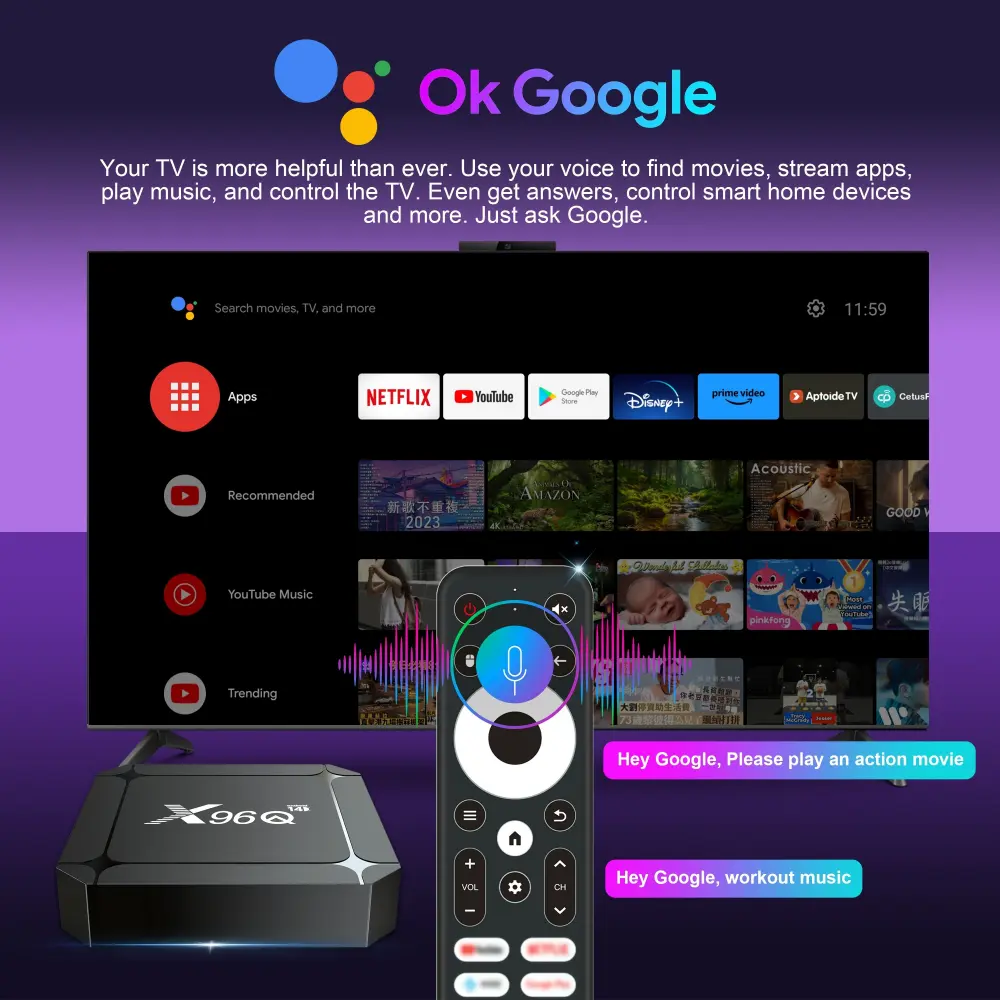
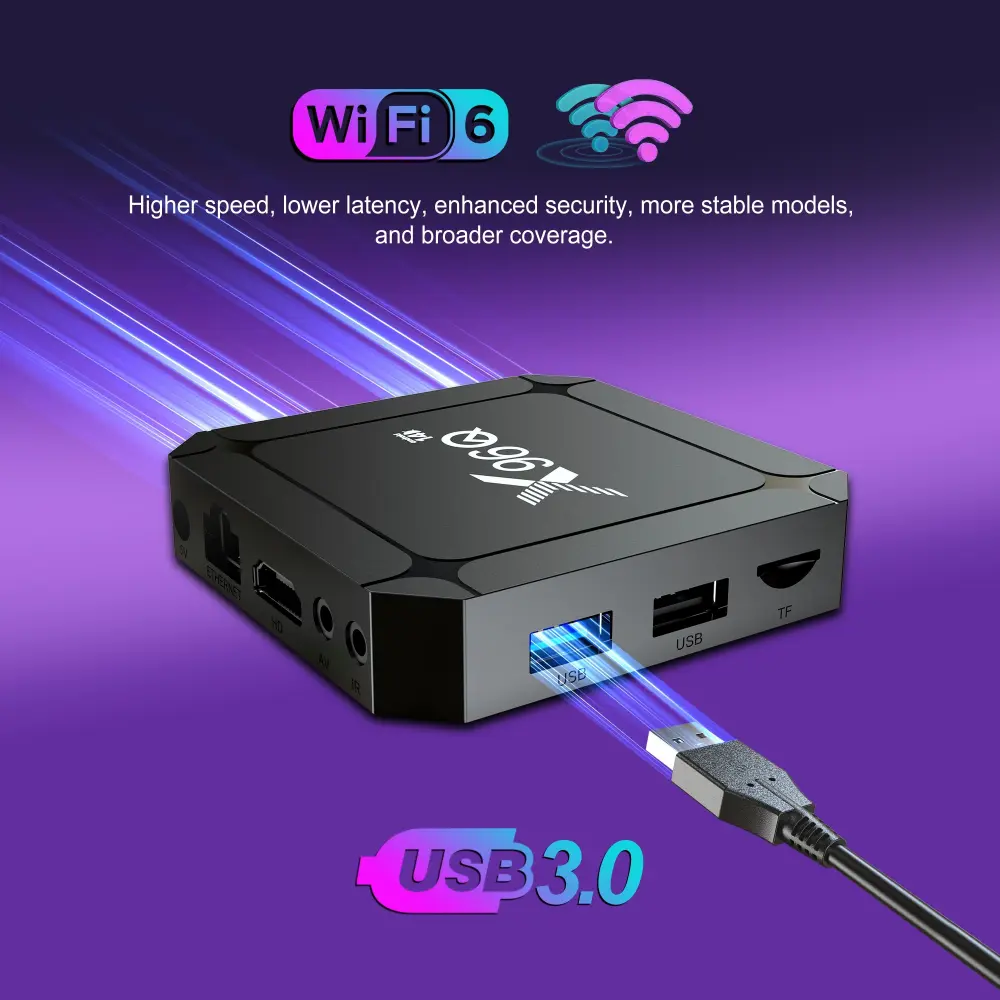
- Wi-Fi 6 (802.11ax) Connectivity: High-bitrate 4K and 8K HDR content streams demand low-latency wireless connections. Advanced hardware platforms now integrate Wi-Fi 6 controllers to maintain high throughput in congested home wireless environments.
- Smart Home Hub Integration: Modern TV boxes increasingly double as Matter or Zigbee edge gateways, transforming standard entertainment devices into centralized smart home automation controllers.
- Commercial & Industrial Features: Rising demand for specialized Android hardware in digital signage, kiosk setups, and hospitality environments requires features like watchdog timers, auto-power-on configurations, portrait rotation orientation locks, and customized remote management APIs.
Building a Long-Term Strategic Manufacturing Partnership
Choosing an overseas hardware vendor is not a one-time transaction; it is a long-term strategic alliance. The ideal Android TV Box manufacturer acts as an extension of your own engineering teamâoffering valuable hardware advice, supporting firmware upgrades throughout the product life cycle, and maintaining stable component pipelines even during global silicon shortages.
By conducting thorough due diligence, prioritizing technical compliance over short-term price cuts, and enforcing strict quality assurance protocols at every stage, you can secure a reliable hardware foundation that drives growth, protects your brand reputation, and delivers exceptional value to your end-users.

Leave a comment
All fields marked with an asterisk(*) are required