TV Box OEM Project Timeline: From Sample Validation to Mass Shipment
Source:tv-boxes.cn Release on: 2026-09-14-18-56-17
TV Box OEM Project Timeline: From Sample Validation to Mass Shipment
For global brand owners, commercial system integrators, IPTV operators, hotel solution providers and B2B procurement managers, sourcing custom Android TV boxes via OEM or ODM models requires clear visibility into every stage of production. Many overseas buyers face costly setbacks such as shipment delays, inconsistent hardware performance, broken custom firmware features, or mismatched packaging simply because they underestimate how many linked steps sit between initial requirement discussion and finished goods delivery. Off‑the‑shelf ready‑made TV boxes follow a simple buy-and-ship workflow, but OEM projects are sequential, with each phase locking in specifications, costs and quality standards before the next phase begins. This article breaks down the full TV box OEM project timeline step by step, explains deliverables, typical working-day durations, risk points and confirmation checklists for every stage. This framework helps buyers manage vendor expectations, avoid costly mid-project changes, keep orders on track, and maintain product consistency between pre-production samples and mass shipment.
1. Pre-Project Communication & Solution Confirmation (3–5 Working Days)
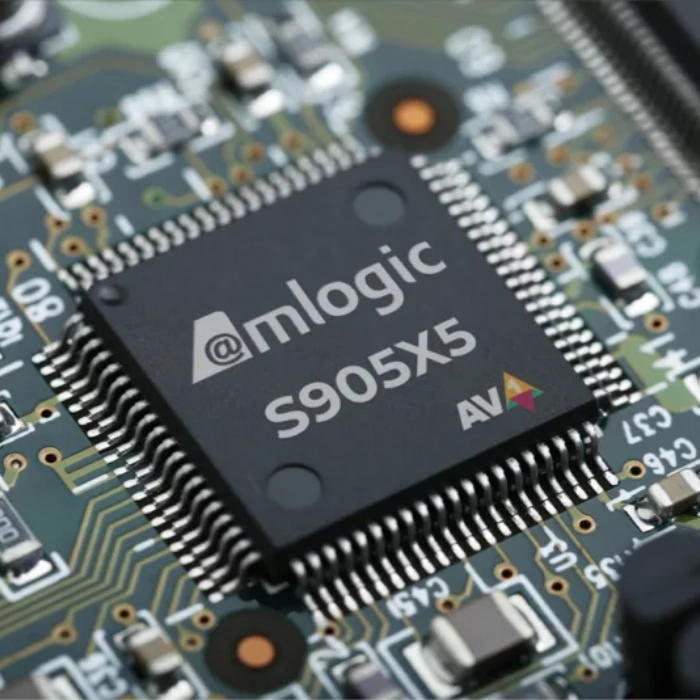
Every TV box OEM project starts with requirement alignment and technical feasibility review. This phase sets the foundation for all downstream work, and rushing this stage is one of the top causes of project delays later. Before a quotation or sample work can start, buyers must define core product requirements clearly. These include target use case: retail consumer sales, hotel in-room entertainment, digital signage media player, IPTV set-top box or industrial kiosk playback. Buyers also need to select the SoC platform, such as Amlogic, Rockchip or Allwinner, alongside RAM and flash storage size, wired ethernet, Wi-Fi and Bluetooth specs, video decoding capability, DRM requirements and operating system variant: AOSP open Android or GMS Google-certified Android TV.
Customization scope is another critical part of this initial discussion. Common OEM customizations include custom silk-screen logo on the plastic housing, custom boot logo and boot animation, modified default launcher UI, preloaded applications, multi-language support, custom default network settings, RTC clock integration, LED indicator behaviour, and custom outer packaging. Some projects may also require hardware modification, such as adding extra USB ports, RS232 serial ports, SIM card slots for 4G/5G modules or upgraded thermal structures for 24/7 continuous commercial operation.
Once requirements are submitted, the manufacturer’s sales and engineering team will review feasibility within one to two working days. They will flag custom features that are technically unworkable, prohibitively expensive or unable to meet certification requirements. The factory then issues a formal quotation sheet listing unit price, MOQ, one-time engineering tooling or firmware development fees, packaging costs, certification charges and payment terms. Buyers should review the quotation carefully, clarifying what is included and what counts as extra cost, such as rework fees for repeated sample revisions or third-party testing charges.
After both sides agree on the technical solution and commercial terms, a formal OEM contract is signed. The contract must lock down hardware specs, firmware feature list, acceptance criteria, lead time schedule, product warranty scope and liability for quality deviation or delivery delay. Simple projects with only logo printing and standard hardware usually finish this phase in 3 working days. Complex projects with deep firmware customization or new hardware modifications may need up to 5 working days or more for engineering evaluation and contract negotiation.
2. Sample Production & Dual-Party Validation (7–10 Working Days)
Sample validation is the gatekeeper of the whole OEM workflow. No mass production can start until samples are fully approved by the buyer. Pre-production samples serve as the single reference standard for hardware, firmware, appearance, accessories and packaging, preventing large batch failures after mass production starts. After receiving the deposit and signed contract, the factory engineering team starts building engineering samples.
Sample build includes manually assembling PCBs according to agreed BOM, flashing custom firmware, configuring pre-installed apps, applying custom branding, carrying out initial functional testing and aging checks. Unlike mass-produced units, samples are built and debugged one by one by hardware and firmware engineers. For standard TV box OEM projects with minor customisation, sample preparation takes 5–7 working days. If the project requires heavy firmware modification, multi-language UI adaptation, special peripheral integration or custom thermal redesign, sample lead time extends to 7–10 working days.
When internal factory testing passes, the manufacturer ships 2 to 3 finished samples to the buyer for independent verification. Buyers need to complete full validation within 2–3 working days after sample receipt. The checklist should cover physical appearance and shell printing, hardware interface integrity, RAM and flash actual capacity, boot sequence, custom boot animation, launcher UI, preloaded applications, Wi-Fi and ethernet stability, Bluetooth pairing, 4K video decoding, audio output, thermal performance under continuous load, remote control responsiveness and power adapter compatibility.
If defects or mismatched custom functions are found, buyers must document all issues clearly with photos and videos and send feedback to the factory. The engineering team will revise firmware or hardware and produce revised samples for re-evaluation. Once samples fully meet requirements, buyers provide written sample approval. After this written sign-off, any further changes to hardware, firmware or appearance will be treated as a new engineering change request, which adds extra cost and timeline delay. This rule is essential to control project scope creep.
3. Raw Material Procurement & Pre-Production Preparation (5–8 Working Days)
Once samples are formally approved, the factory moves to raw material procurement and production line preparation. This phase is often underestimated, especially when core chips are out of stock or have long lead times. All components must be sourced strictly following the BOM locked in the approved sample; substituting components without buyer consent is forbidden, otherwise mass-produced products will differ from validated samples.
Key bill-of-material items include main SoC chips, LPDDR memory, eMMC flash, PCBA circuit boards, power adapters, infrared or Bluetooth remote controls, plastic housings, thermal pads, cables, custom printed boxes, user manuals, stickers and cartons. The procurement team first checks internal inventory. Standard, commonly stocked components are reserved immediately. For core semiconductors or custom moulded parts with limited stock, the procurement team places formal orders with upstream chip and component suppliers.
Standard material procurement normally takes 3–5 working days. When popular chips are in tight supply or custom packaging boxes need printing, this phase may stretch to 5–8 working days. While waiting for incoming materials, the production team completes pre-production setup: calibrating SMT machines, preparing jigs and test fixtures, training assembly line operators, finalising mass production test scripts and printing formal work instructions and QC standards. All test procedures must mirror the same validation criteria used for the approved samples.
4. Formal Mass Production & In-Process Quality Inspection (10–15 Working Days)
Mass production occupies the largest share of the OEM timeline. Production runs on automated and semi-automated assembly lines with built-in quality gates at every major step. The workflow starts with SMT placement for PCB boards. Components are soldered onto the printed circuit board via reflow ovens. After SMT, automated optical inspection and board-level function tests filter defective PCBs before they move to assembly. Bad boards are rejected early to avoid wasting assembly labour and housing parts.
Qualified bare boards move to assembly stations. Workers mount housings, thermal parts, ports and antennas. After hardware assembly, every unit goes through firmware flashing, applying the final custom firmware build approved in the sample phase. Testers then run a full functional test suite: power-on test, boot test, network connectivity, Bluetooth test, video playback, remote control test and partial burn-in aging. In-line QC inspectors perform random sampling during production. If batch-level defects are discovered, production is paused for root cause analysis and corrective action to prevent bad units from continuing down the line.
For regular orders below 10,000 units, mass production plus in-line testing takes 10–15 working days. Production time scales with order volume; orders larger than 10,000 pieces will need extra time allocated. The factory targets a yield rate above 99% for mature TV box designs. Buyers can also arrange third-party inspection companies such as SGS or Intertek to carry out mid-production or pre-shipment inspection if required.
5. Finished Product Inspection, Custom Packaging & Warehousing (3–5 Working Days)
After assembly and functional testing finish, all finished TV boxes enter final QC and custom packaging. This stage ensures that cosmetic defects, printing errors, accessory mismatches or packaging mistakes are caught before shipment. The QC team performs final visual and functional recheck. Inspectors check shell scratches, logo printing quality, port condition, remote control pairing, power adapter matching and firmware version consistency. Non-conforming goods are sorted for rework or scrapped.
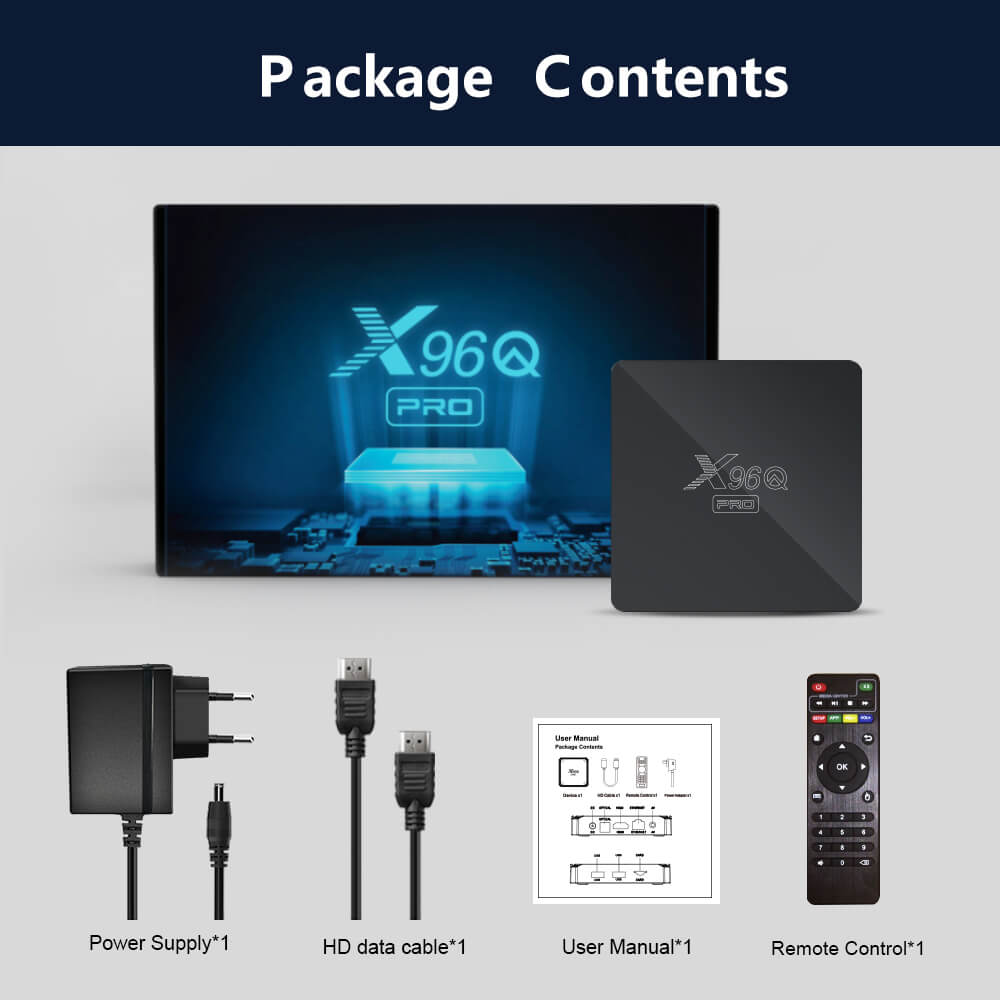
After passing inspection, products move into packaging. Operators pack each TV box into custom colour boxes with matched accessories: power adapter, remote control, HDMI cable and printed user manual, following the approved packaging sample. Boxes are then packed into export outer cartons, labelled with batch numbers, quantity marks and shipping marks defined by the buyer. Batch coding helps trace production lots for after-sales support if any quality issues arise after delivery.
Sorting, final inspection and custom packaging usually take 3–5 working days. Once packaged, goods are counted and moved into bonded warehouse storage, waiting for shipment scheduling. Buyers can request pre-shipment inspection at this warehouse stage to verify quantity, appearance and random unit function before the container is closed or handed to freight forwarders.
6. Shipment Arrangement & Document Handover (1–3 Working Days)
When goods are warehoused, the sales and logistics team arranges shipment according to the buyer’s selected transport mode: sea freight, air freight or courier. The factory confirms shipping mark, destination address and incoterms once again to prevent delivery mistakes. Meanwhile, the documentation team prepares export documents required for customs clearance in the destination country. Standard documents include commercial invoice, packing list, bill of lading or airway bill, CE, FCC, RoHS certificates and product test reports.
Document preparation and handover plus goods handover to freight forwarders normally takes 1–3 working days. After handover, the factory sends tracking number or bill of lading copy to the buyer, so the buyer can track transit progress. Buyers should keep all certification documents for customs inspection and local market compliance checks in their target markets.
7. Full Cycle Summary & Key Notes for Timeline Control
The full OEM project from requirement confirmation to goods ready for shipment totals roughly 29–46 working days, equivalent to about 6–9 weeks. Simple OEM jobs with only logo printing and no firmware modification can finish near the 6-week mark. Complex projects with new hardware design, heavy firmware development and multi-certification requirements can take close to 9 weeks or longer.
There are two high-impact rules buyers must follow to keep the timeline under control. First, freeze all requirements before sample approval. Changing specs after sample sign-off triggers engineering change work, new sample rounds, BBO material reordering and cost increases. Second, respond quickly to factory requests for sample feedback, document sign-off and deposit payment. Delays on the buyer’s side directly push back every downstream milestone.
Working with an experienced Android TV box OEM manufacturer brings greater transparency. A reliable vendor will share milestone updates, photos and test reports during production, instead of only updating buyers at shipment time. Clear project management reduces surprises and protects your budget and launch schedule. Whether you are building TV boxes for hotel deployments, digital signage networks or retail branded products, understanding this OEM timeline helps you plan marketing, warehousing and sales schedules in advance.
If you are looking for a trusted manufacturer to launch your custom Android TV box OEM project, our team provides end-to-end OEM and ODM services including hardware selection, firmware customisation, branding, certification support and on-time mass delivery. Contact us to discuss your requirements and get a tailored project timeline and quotation.

Leave a comment
All fields marked with an asterisk(*) are required